
How to break into Carbon Accounting- an AI-resistant career with growing demand
A lot of people assert, “I want to do something meaningful”, but then immediately hit a wall because the path isn’t obvious at all. Carbon accounting has historically been a hyper-niche role, but as per multiple researches it’s fast growing in demand and paying six-figure salaries at top firms from some of the largest organizations. Yes, it sounds confusing, and almost no one really tells you how it feels to get started.
So, if you’ve ever thought, “How do I actually get into this?”, this blog is for you. I’m here to break down what carbon accounting really is, how people actually get into it, which skills ensure success, and what to expect.
So, what is carbon accounting & why it matters
At it’s very basic, Carbon accounting is simply measuring and tracking a company’s emissions. It matters because companies are now required to report this data, as investor pressure mounts, consumer expectations rise, and regulations tighten globally. Now coming to the most important question. What does a career path look like? It’s not just someone sitting in a cubicle box with a calculator figuring out “carbon numbers.”
A typical role is way more dynamic. It is digging into operational data like energy use, fuel consumption, and even supply chains, then applying emission factors to convert all that into actual carbon footprints. After that, you’re reporting it under global frameworks like the GHG Protocol or ISO standards, and often working with teams to figure out how to reduce those emissions in the future.
The coolest part? You’re not limited to one type of workplace. People in this field end up in ESG teams inside companies, consulting firms helping multiple clients, fast-growing climate-tech startups or even in government and policy roles shaping regulations.
So, while the term “carbon accounting” sounds niche, the actual career paths around it are surprisingly diverse and growing fast.
What skills, degrees and certifications do you actually need?
Well, we have interviewed 10s of specialists, read 100s of interviews and browsed 1000s of Reddit posts, and the answer still is – there is no single “perfect” path into carbon accounting.
People enter this field from very different backgrounds : engineering (chemical, environmental), economics, finance, or sustainability studies. What matters more than your degree is whether you can actually work with emissions data and understand how reporting works.
One professional shared:
“There isn’t a top notch certification since so much of this has developed over the past decade.”
When it comes to skills, the technical side includes emissions accounting, data tools like Excel, Power BI, sometimes Python and basics of lifecycle assessment (LCA).
“Majority of my time and energy is spent cleansing data or explaining to clients what data inputs are needed.”
-Another user on Reddit
That’s one non-fun part no one ever prepares you for. You will spend a lot of time explaining ‘what data is needed’ to people who have never thought about emissions before. So, beyond tools, you need to have the ability to communicate with non-technical teams and a lot of patience since the data is messy.
But like every good detective story, it’s incredibly satisfying when you finally track down the carbon culprit and cut it at the source.

Most people learn this on the job. Domain knowledge in basic climate science Frameworks like GHG Protocol, ESG reporting is also needed. But you don’t need to be a climate scientist.
Instead of one defining credential, most professionals build their knowledge through different frameworks and practical exposure.
“ The biggest thing I’d focus on first is understanding the Greenhouse Gas Protocol framework. Almost everything in carbon accounting is built around that. For certifications, a few that tend to be respected by employers are: • Training around ISO 14064 (GHG measurement and verification) • ESG sustainability reporting programs through Association of Chartered Certified Accountants • Reporting frameworks like Global Reporting Initiative. ”
-A user shared on Reddit
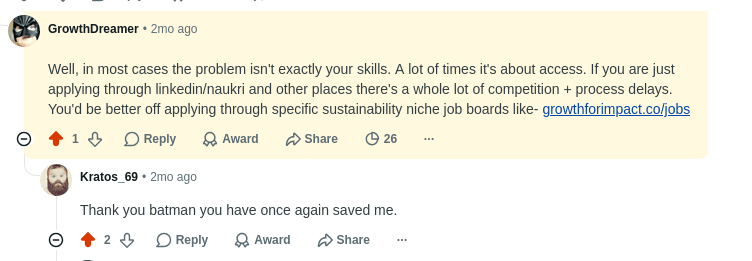
None of these are magic tickets. In reality, people break into this field through internships, ESG or sustainability roles and data/analyst positions and then make a timely transition. And if you are looking to get started, our free sustainability job board might be the best place to start. Because as one Reddit user put it honestly:
So, where can this take you?
Here’s the thing. Carbon accounting is still finding its shape, and that’s genuinely good news for you. In an AI-first world that’s quietly eliminating “safe” career paths, this field is doing the opposite. It’s creating new roles faster than universities can name them. No rigid ladder to climb. No outdated playbook to follow. You get to grow as the field grows and right now, that’s moving fast.
“Most people don’t start with the title “carbon accountant.” Roles like ESG analyst, sustainability analyst, environmental consultant, or supply chain sustainability analyst are common entry points.”
-A carbon accounting professional highlighted on Reddit
Over time, as they gain experience with emissions data, reporting frameworks, and tools, they move into more specialized roles. A typical growth path looks something like this:
- Junior / Analyst roles (data collection, reporting support)
- Carbon or ESG specialist (handling full emissions inventories)
- Senior / Lead roles (strategy, audits, decarbonization planning)
- Leadership roles (Head of Sustainability, Climate Strategy Lead)
It’s not all smooth sailing
Carbon accounting sounds impactful and it is, but the day-to-day work isn’t always as glamorous as it seems.
The biggest challenge? Data.
Most companies don’t have clean, structured emissions data. You’re often pulling information from incomplete spreadsheets or systems that were never designed for sustainability reporting. Which is the kind of people-facing role which AI can’t automate for now.
But yeah, that also means a large part of your job, especially early on, involves, chasing teams for missing data, figuring out what data is even relevant and cleaning and standardizing messy inputs.
Another challenge is ambiguity. Unlike fields like finance or software, carbon accounting doesn’t always have one “correct” answer. Emission calculations can vary depending on subjective assumptions, boundaries, and methodologies.

And lastly the biggest challenge is the communication aspect. Explaining to non-technical users why certain data is needed, why it matters and why they should care.
“That is an aspiration. I don’t see it happening”
-A user on Reddit
And honestly, not everyone will, but it always becomes easier if you can find the right allies. As one Reddit user put it:
“I think “carbon accountant” is simply the first concept we will start accounting seriously (next to money).”
If you enjoy working with data, solving messy problems, and communicating across teams, you’ll thrive.
“I work in carbon accounting, although I didn’t complete a specific degree in the field. However, because I had a strong desire to work in this area, I’ve consistently sought out roles and experiences related to it. So far, it’s worked out well for me.”
-A user on Reddit
Final verdict: is this a good career?
Yes, absolutely, especially if you’re willing to grow with a field that’s still evolving. This is not a perfectly structured career path (which is part of the AI-proof appeal) and that’s exactly why it’s full of opportunity.Right now, companies are still figuring things out and as repeated surveys show the demand is only increasing, which means if you can understand emissions, work with data, and communicate insights, you’re already ahead of most people trying to enter this space.