
Sustainable architecture myths: what most people get wrong
Let’s be honest for a second.
When you hear the words sustainable architecture, what comes to mind?
If your first answer was solar panels, green roofs, or walls covered in plants, you’re in good company. Those features have become the face of sustainable architecture.
The problem is, they’re only part of the story.
Because sustainability in buildings isn’t always something that looks new or futuristic. A lot of older design ideas were already doing something very similar, just without calling it “sustainable.”
“Historically many building techniques were developed to control the temperature inside buildings. To some degree also the amount of natural light. Once energy became an ubiquitous and cheap utility, central heating and A/C replaced all that.”-one commenter in an online discussion about modern green buildings
And that really hits the point.
Because somewhere along the way, we started treating sustainability like a feature you add to a building at the end, not through it’s very design and architecture phase. But that’s not how its supposed to work.
Long before solar panels, heat pumps, and green certifications, buildings were already designed with climate in mind.
Not as a bonus feature, but as the foundation.
Today, we absolutely do have powerful tools. Solar panels, efficient HVAC systems, smart building tech, they all play a huge role. But they work best when they’re supporting a building that already makes sense without them.
And that gap between adding sustainability and designing for it from the start is where a lot of misunderstandings about sustainable architecture begin.
Myth 1- If it looks green, it must be sustainable.
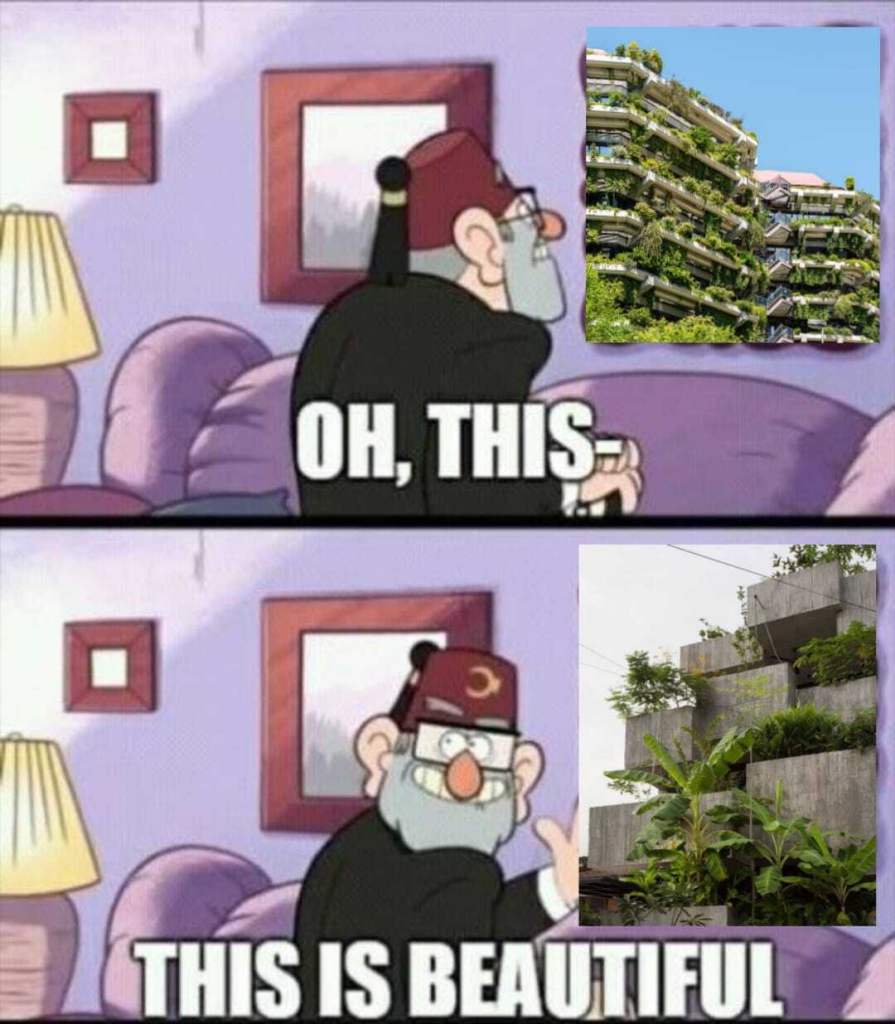
We see green roofs, vertical gardens climbing glass façades, and sleek towers wrapped in plants, and our brain quickly connects the dots.
Green visuals equals green building. Problem solved.
But appearance and performance don’t always tell the same story.
A building can be covered in vegetation and still rely heavily on energy intensive systems to stay comfortable. Glass facades with decorative greenery might look climate friendly, but if they come with poor shading and high heat gain, the cooling demand can actually increase.
Meanwhile, some of the most effective sustainable buildings don’t look green at all.
They rely on simple passive strategies like deep overhangs, shaded courtyards, cross ventilation, and careful orientation to reduce heat gain before mechanical systems even come into play.
Myth 2- Sustainable architecture is all about adding green technology
This is probably the most modern myth of them all.
Because it feels like we’ve cracked sustainability through technology.
Solar panels, smart sensors, automated lighting systems, real time energy dashboards. And visually, it makes sense. These are the parts of a building we can actually see and measure.
But in real building performance, technology is rarely the starting point. It’s usually a layer added on top of design decisions that were already made, for better or worse.
There’s a well established principle in building science often called fabric first or passive first design. The idea is simple: reduce energy demand through design before trying to supply energy efficiently.
The UK Green Building Council puts it clearly:
“The most cost-effective way to improve building performance is to reduce energy demand first, before considering efficiency or renewable technologies.”
Now think about what that actually means in practice.
A solar panel doesn’t reduce overheating caused by a fully glazed facade. A smart system doesn’t fix a building that loses cooling through poor orientation. And energy-efficient equipment still has to work much harder if the architecture itself is fighting the climate.
Technology helps, but it is not the starting point. It is support.
So the real question is less about what technology a building has, and more about what the building needs it for in the first place.
Myth 3- There is one sustainable solution for every city
This idea sounds comforting. Almost efficient. If a solution works somewhere, why not just replicate it everywhere else?
That’s often how sustainability gets reduced to a handful of familiar ideas. It’s easy to assume that the same strategies can simply be copied from one city to another. Find a successful project, repeat the formula, and expect the same results.
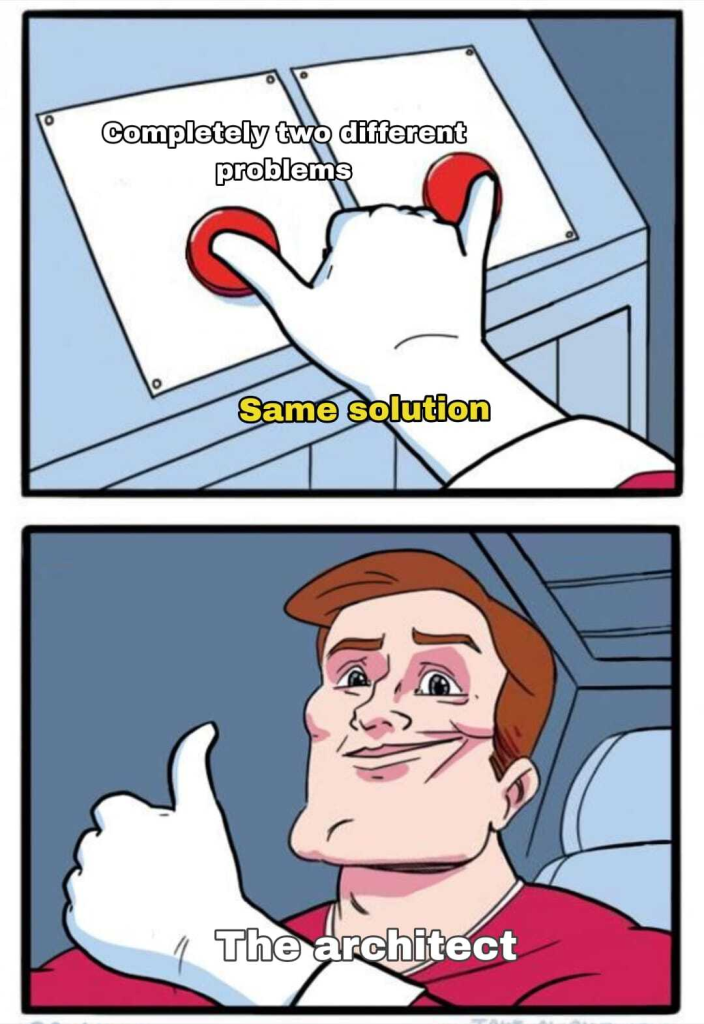
But cities don’t work like that.
Take green roofs, for example. They can reduce urban heat, improve insulation, and manage stormwater in cities with frequent rainfall. But in hot, arid regions, they may require significant irrigation to stay healthy, making them a less practical solution unless designed specifically for the local climate.
A landscape choice that works in one place can become a long-term strain in another.
Even something as simple as a parking surface shows this difference. In some places, interlocking pavers allow water to seep back into the ground instead of overwhelming drainage systems.
“Back when I lived in Korea a lot of the small parking lots were interlocking brick that had spaces for water to drain through. I thought it was a super clever idea.” –One person in an online discussion about designing for aquifer recharge shared their experience
A small design move, but completely tied to local conditions.
Because cities differ in soil, rainfall, density, infrastructure, and even how people actually use space.
So expecting one sustainable solution to work everywhere is a bit like expecting the same outfit to be comfortable in both the Arctic and the desert.
Myth 4- Modern buildings are automatically more sustainable
The word “smart” has a strong bias built into it.
When we see a freshly completed building with clean lines and modern systems, it’s easy to assume it must be more sustainable than what came before it.
But sustainability doesn’t reset with new construction.
A building is not just what it does when it’s finished. It’s also everything it took to get there.
That upfront impact is called embodied carbon, the emissions from extracting materials, manufacturing them, transporting them, and constructing the building.
Unlike operational energy, this happens before the building is even used.
Which creates a quiet contradiction.
A smarter building may perform better day to day, but still carry a significant carbon debt from the moments it was being built.
And that carbon doesn’t disappear when the building reaches the end of its life either.
“In the global economy we live in today, about 90 percent of a building is going to go into the landfill eventually. Buildings may seem permanent, but the average only lasts around 50-60 years.”-as highlighted in studies on circular economies in architecture.
When you think about it that way, every new smart building isn’t just a new beginning. It’s also part of a cycle where buildings are eventually demolished, materials are discarded, and the whole construction process starts again.
That’s why sustainability isn’t just about designing better new buildings. It’s also about extending the life of existing ones wherever possible.
If we only measure operational performance, modern buildings often come out ahead. But a truly sustainable assessment looks at the building’s entire life cycle, including the emissions created long before the lights are switched on.
That’s why the construction sector accounts for a significant share of global carbon emissions, with a substantial portion tied to materials and construction itself.
So maybe the better question isn’t, “Is this building smart?”
It’s, “Was building something efficient the most sustainable choice, or could we have made better use of what already existed?”
Myth 5- Sustainable design has no downsides
This is where the conversation often gets too sanitized.
Sustainable design sounds like an upgrade in every direction. Lower emissions, better performance, smarter systems, healthier spaces.
But in reality, it doesn’t work without trade-offs.
Take maintenance. High-performance systems, airtight envelopes, and advanced ventilation all depend on consistent upkeep. When maintenance slips, performance drops with it.
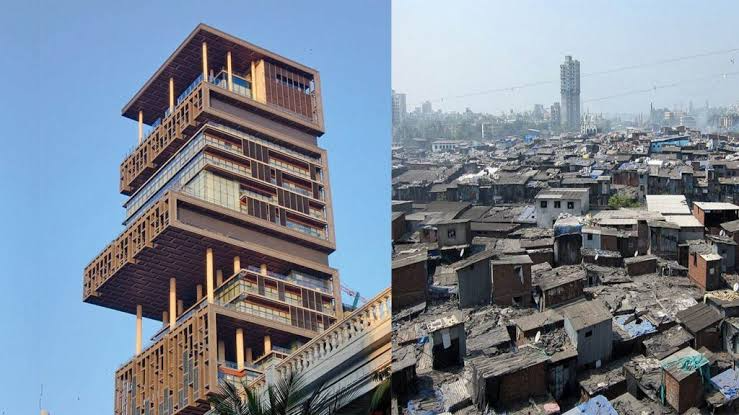
Cost plays a role too. Even when long-term savings are built in, the upfront investment is often higher, which can shape what gets built, where it gets built, and who it gets built for.
Material complexity adds another layer. The more advanced the system, the more layered the assembly tends to be, which can make disassembly, recycling, or reuse much harder at the end of life.
And then there’s climate. What performs beautifully in one region can underperform in another if it isn’t adapted properly.
The point isn’t that sustainable design is flawed. It’s that it is not frictionless.
And when we ignore that, we end up with a version of sustainability that looks perfect on paper, but struggles once it’s actually lived in.
Myth 6- Sustainability ends after construction
Once a building is completed, we tend to assume the sustainability job is done.
Certifications are awarded, targets are met, and the building is labeled green. But a building doesn’t stop interacting with its environment after handover.
It keeps consuming energy, aging, leaking, being repaired, modified, and sometimes heavily altered long before its intended lifespan ends.
We often treat construction as the main event, and everything after as maintenance.
But in reality, performance unfolds over decades. Filters clog, materials degrade, systems lose efficiency, and small changes accumulate into real environmental impact over time.
So sustainability is not something that gets completed at construction.
That’s often when it really starts.
Myth 7- Architects alone decide how sustainable buildings become
There’s a comforting assumption that architects control how sustainable a building becomes.
But architecture is only one part of a much larger system.
Before design even begins, developers define budgets and risk. Clients shape priorities, regulations set boundaries, and planning controls what is even possible.
By the time design decisions are made, many of the biggest sustainability choices are already constrained.
So sustainability is not a single design decision.
It is the outcome of many decisions made across different people, roles, and timelines.
Where sustainability actually gets shaped
If there’s one takeaway, it’s this-Sustainable buildings are not the result of one moment or one decision.
They come from layers of decisions across design, cost, regulation, materials, and long term operation.
Which also means most sustainability outcomes are not obvious at the point of design. They are shaped in trade offs and constraints that sit across multiple stakeholders. By the time construction starts, many of those choices are already locked in.
That is why sustainability often depends less on adding features later, and more on connecting decisions early enough to still influence them.
And if you are working on projects where sustainability is more than just a checkbox, the hardest part is often knowing who to bring in at the right time.
That is where we help, by connecting you with the right sustainability expertise based on what your project actually needs.
