
Why most ESG-tech startups don’t succeed? And what can you do to increase your odds
The easiest way to convince yourself you’ve found a great startup idea is to look for a growing market.
ESG-tech as a domain should, in theory, be a straightforward win.
The demand isn’t something you need to create. It already exists inside how companies operate today and the mandates forcing them to transition. The status quo way of recording all the data points either manually or on excel just isn’t feasible. Every company needs a better solution.
Yet despite that, you still see hundreds of founders building in the same space, while only a small handful actually manage to build successful ESG businesses.
This is supposed to be one of the largest business opportunities of our generation.
So why does it still feel like so many climate-tech startups are struggling to break through?
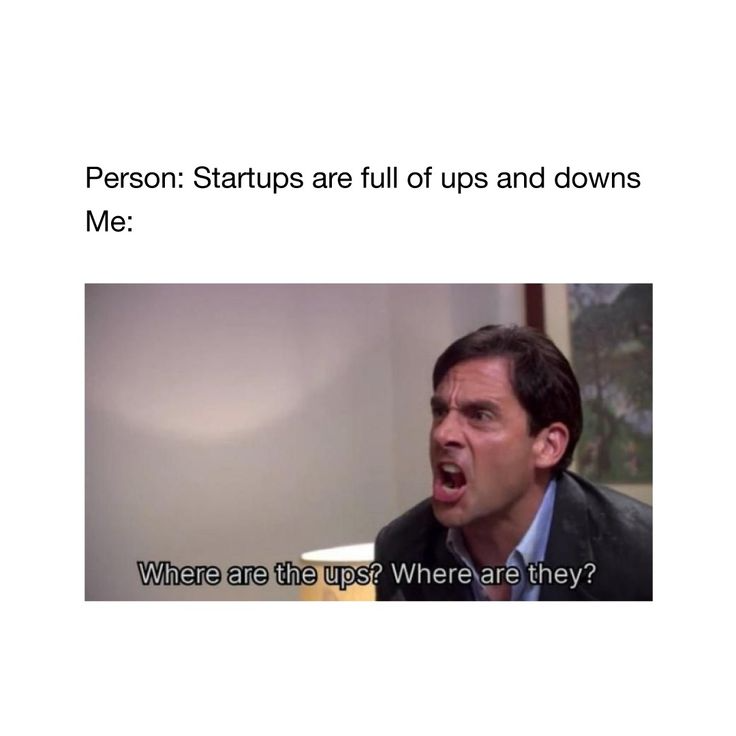
Everyone is solving the same problem
One uncomfortable truth in ESG-tech is this: you’re rarely stepping into an empty market. Most of the time, you’re entering a space where everyone is already solving some version of the same problem.
“Your solution GREIQ will be one among a million solar / offset calculators and ESG compliance tools already in the market.”- a founder pointing out that most products in this space end up looking interchangeable.
And honestly, he’s not entirely wrong.
A lot of founders in ESG-tech end up confusing information with intervention. They build footprint calculators, dashboards, carbon scores, awareness tools, and assume that’s what people are selling.
But when companies actually spend money, they’re usually not buying information alone.
They’re buying something that helps them make a decision, pass an audit, satisfy a customer requirement, gain access to a market, or reduce a business risk.
And that’s where many products quietly drift off track.
The challenge isn’t just finding a problem worth solving. It’s finding a place in the workflow where your solution becomes difficult to ignore.
You might have come across the “Jobs To Be Done” theory. Instead of thinking in terms of features like carbon calculators or ESG dashboards, JTBD frames the question around what the user is actually trying to accomplish in that moment.
In that sense, the real competition isn’t other ESG tools. It’s the current state of inaction or friction inside the organization before any tool is introduced.
AI accelerated the competition
And if the market wasn’t already crowded enough, AI has only made it easier for new products to appear.
With AI coding tools, you can now put together ESG tools surprisingly fast. What used to take a team and months of work can be prototyped in days.
Building dashboards, calculators, and reporting layers is cheaper, and more accessible than ever.
“I built and launched a SaaS in under a week using AI coding tools. AI coding tools handled 80% of the boilerplate.”-a solo developer from India sharing his experience. He also noted that while building became much faster, marketing and distribution remained the real challenge.
On the surface, that sounds like a good thing.
But it also means the barrier to entry has dropped significantly. When building becomes easier, standing out becomes harder.
Some founders double down on making their tools more modular, more automated, or more efficient, assuming better engineering automatically translates into better outcomes. And in some cases, it does improve the product.
But in most real-world ESG workflows, the problem isn’t technical capability.
Even the most advanced tool doesn’t matter if it’s solving something the client doesn’t actually prioritize, doesn’t feel pain from, or isn’t being measured on in the first place.
That’s why simply creating another tool is rarely the advantage anymore.
What starts to matter is understanding where the real value sits, especially when everyone else can build something similar.
Most founders mistake climate urgency for market demand
And even when founders identify a real problem, there’s another assumption that quietly causes trouble.
A lot of people building in ESG assume urgency automatically translates into buying behavior.
The logic sounds reasonable, climate change is urgent, so companies should naturally move faster, spend money, and adopt solutions.
But that’s not really how buying decisions work.
Most companies don’t invest in something simply because it feels important. They invest when it affects something they can clearly see inside the business. And that could be reducing costs, creating revenue opportunities, meeting regulatory requirements, keeping customers happy, or solving a problem that becomes expensive to ignore.
Because a problem can be urgent at a global level while still not being a purchasing priority inside a company. It’s a bit like taxes. Everyone knows they’re important. But most people still don’t take action until it starts feeling real.
So ESG adoption doesn’t follow urgency first. It follows visibility, pressure, and impact.
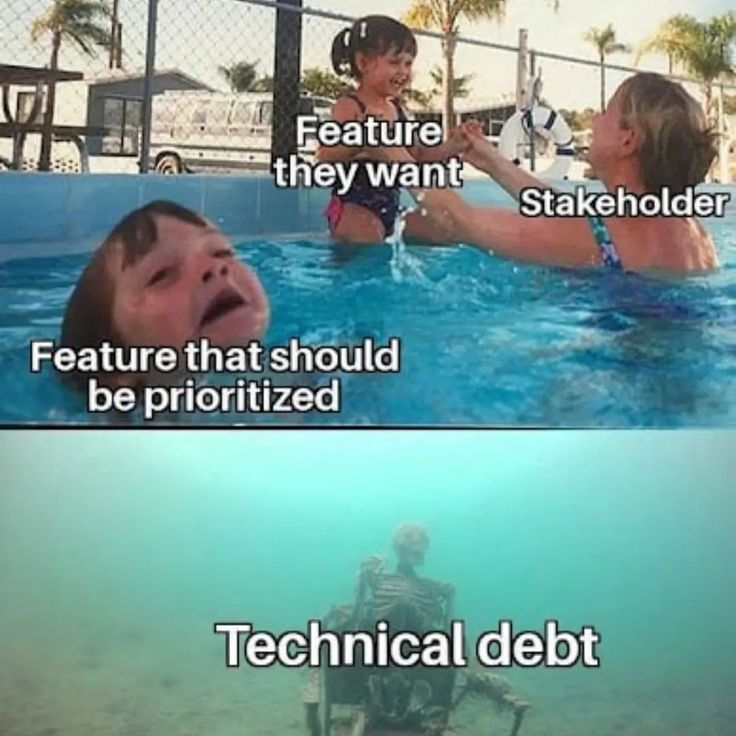
Climate-tech doesn’t scale on startup timelines
A lot of founders go in expecting progress to happen in a fairly predictable way. Build the solution, find customers, improve the product, and keep moving forward.
But climate-tech rarely moves in straight lines.
“Our IP technology in renewable fuels, is proven, took 8 years to design, develop,pilot, test and deploy.”- a founder working in renewable fuels shared his experience
And that timeline alone tells you a lot.
Because you’re often dealing with physical systems, infrastructure, real-world deployment, testing, approvals, and stakeholders long before anything even resembles scale.
And that’s before the customer journey even starts.
“Our business model was very huge cashflow incentive which we were unable to manage , also carbon credits for small farmers is a very challenging, for bigger farms its easy to manage and generate income. so we are now in winding up phase.”- another founder reflected on why their climate and AI startup struggled.
The challenge isn’t always building the technology. Sometimes it’s everything that comes after.
Unlike consumer software, where users can sign up and start using a product in minutes, climate-tech buyers are often businesses making high-stakes decisions. New solutions have to pass technical reviews, procurement processes, budget approvals, pilot projects, and sometimes even regulatory checks before they’re adopted.
That means decisions don’t happen in weeks. They often take months, sometimes multiple quarters.
In other words, “move fast and break things” isn’t how most climate-tech customers operate.
The real challenge is getting someone to trust
And that trust doesn’t stop at your calculations.
There’s another question companies ask before they even think about adopting a new ESG platform: “are we comfortable sharing our data with this tool?”
And that’s not an easy decision.
Many ESG platforms need access to information spread across multiple business units, suppliers, manufacturing sites, or even different countries.
Energy consumption, procurement records, supplier details, and some of this can be commercially sensitive, while some may be subject to internal governance or data residency requirements.
So the hesitation isn’t always about whether the software works. It’s about whether critical information should leave existing internal systems at all.
Questions like Where is the data stored? Who can access it? How secure is it? Can it leave the country? often become just as important as the features your product offers.
Even after that barrier, another layer appears.
Now it’s about whether the methodology behind the numbers can stand scrutiny, from auditors, regulators, customers, and internal leadership.
At that point, it’s no longer just about choosing a tool. It’s about whether the organization can confidently defend the outputs later.
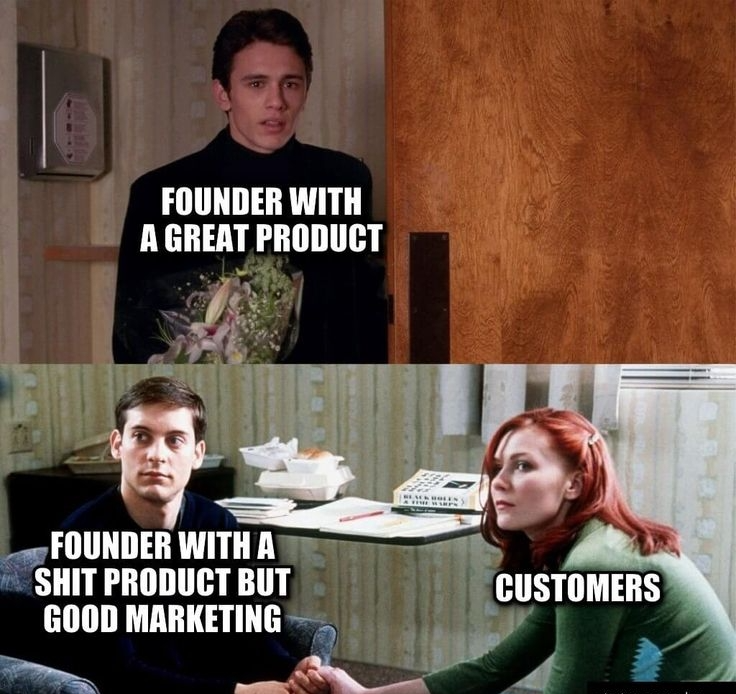
And even when you’ve earned that trust, you’re still not done. Because your perceived buyer is rarely the only decision-maker.
The gatekeepers between you and the customer
Big consultancies often influence ESG strategies and reporting approaches. Auditors and certification bodies help determine whether disclosures and methodologies can withstand scrutiny. Procurement teams evaluate vendors long before a contract is signed.
So by the time a new tool enters the conversation, it isn’t entering a blank slate.
It’s entering an ecosystem that already has its own processes, relationships, expectations, and gatekeepers.
In most cases, it isn’t a decision made by one person. It’s a decision made by a committee. Technical teams, sustainability leads, procurement, finance, legal, and sometimes external advisors all have a say in whether a solution moves forward.
That’s easy to overlook when you’re building because it feels like you’re selling software.
But in reality, you’re often asking companies to change workflows, adopt new methodologies, and trust a new source of information.
And that’s exactly why getting adoption is often much harder than most founders expect.
Why most ESG startups fail before they find product-market fit?
By this point, the challenge isn’t usually the technology itself.
Many founders build something that genuinely solves a problem. The harder question is whether they can survive long enough for the market to adopt it.
Enterprise buying cycles take time. ESG-related decisions can take even longer because companies aren’t just evaluating a product. They’re evaluating methodologies, compliance implications, reporting requirements, and how the solution fits into existing processes.
So while the startup is waiting for decisions, pilots, approvals, and contracts, the clock is still ticking and yes, you have employees to pay.
Some companies benefit from regulatory changes that suddenly make their solution more relevant. Others grow through consulting partners who help open doors and navigate the market.
But not every startup gets that advantage.
Sometimes the challenge isn’t building the product. It’s staying alive long enough for the market to catch up. If there’s one consistent bottleneck, it’s visibility, getting in front of the right opportunities and the right decision-makers before runway runs out. That’s why distribution matters as much as product. Whether it’s funding, accelerators, or consulting networks, the startups that survive are often the ones that find the right channels early.
And that’s the problem we’re trying to make a little easier to navigate through Growth for Impact, helping sustainability startups connect with the consultants and networks that already influence buying decisions in this space. So, if you are looking to maximize your chances of getting in touch with the right decision makers, just fill this short form here.