
Why Vague Job Descriptions Are Costing You the Right Opportunities
“I don’t get it. Some job ads list 10+ “required” skills that seem impossible to have all at once, plus soft skills that sound like you need to be a therapist and a mind reader. It’s like companies want a unicorn who codes, designs, manages, AND makes coffee. Are they just fishing for someone to fill in the blanks? Or do they actually expect all that for a junior role? Anyone else feel like they need a decoder ring just to apply? Would love to hear what weird requirements you’ve seen.”
A user on Reddit described modern job descriptions as feeling like “a game of spot the red flag.
Open any ten random job descriptions today and there is an enormous chance you’ll find the same phrases doing the same amount of work- “Fast-paced environment.” “Self-starter who thrives under pressure.” “Wear many hats.”
Somewhere near the bottom, if you’re lucky, there’s a salary range attached. Usually right below requirements asking for five-plus years of experience for what still somehow pays like an entry-level role.
The job description situation is so dire currently, that candidates have built their own informal translation guide. “Self-starter” means you’ll be figuring things out alone. “Wear many hats” usually means the last person in this role burned out and left, and the company redistributed their work rather than replacing them. People on r/recruitinghell have been cataloging these translations for years, and the list keeps getting longer. Over time, these phrases stopped sounding aspirational and started rather came across as potential sign of warnings. But here’s the thing, candidates have learned to scroll past these. Companies, apparently didn’t get the memo.
The First Breach of Trust
There’s a phrase people online have started using- “career cat-fishing.” Which sounds dramatic until you realise everyone immediately knows what it means. You apply for one thing and slowly discover you’re doing something else.
The “creative strategy” role becomes backend admin. The “fast-paced startup” turns out to be three people doing the work of ten.
Most people expect work to be hard sometimes. What frustrates them is that someone sold the role differently. Responsibilities that only appear after joining. Entire parts of the workload that somehow never came up during interviews.
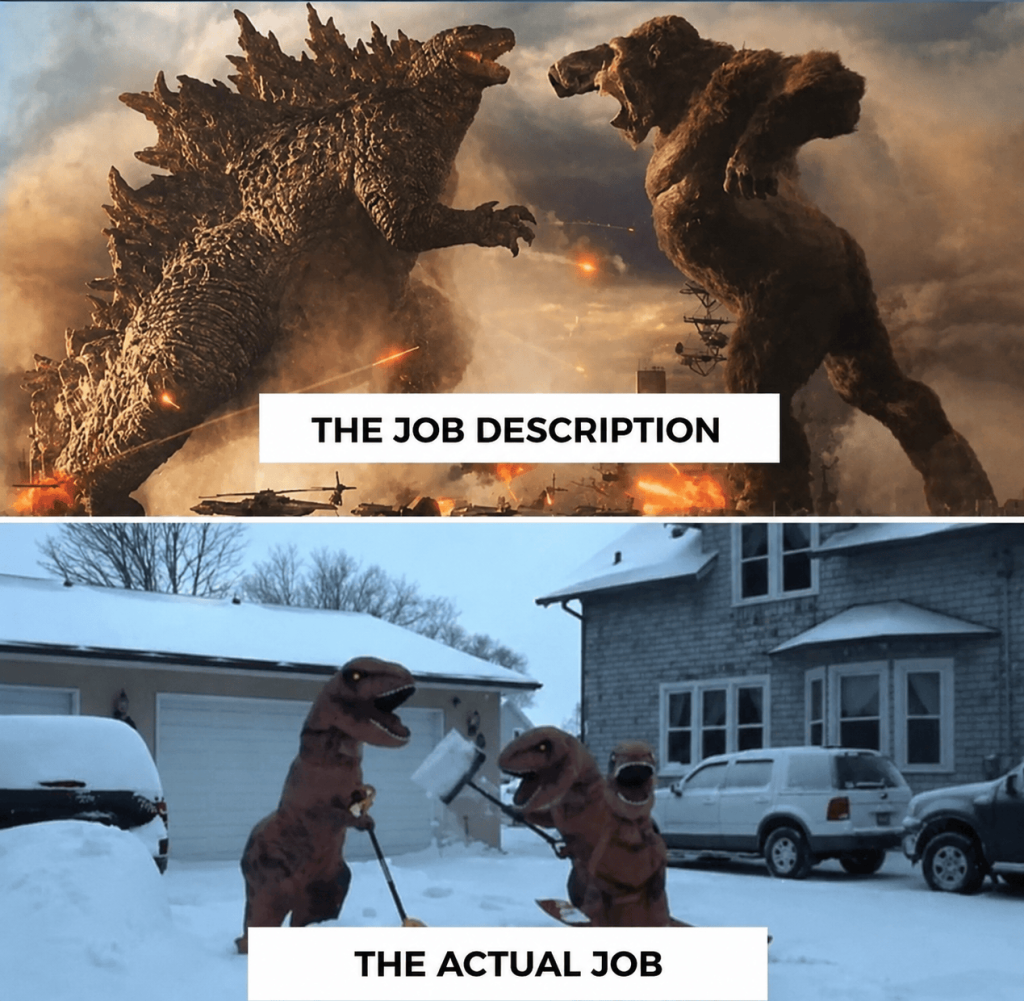
A company can mislead employees by providing a misleading job description, which may spark distrust about other unshared information.
Nobody traces low morale or disengagement to job description mismatch, but it probably started from there.
The Candidate You Never Knew You Lost
One of the more invisible problems with a badly written job description is that companies rarely see the people they pushed away.
Strong candidates usually don’t send feedback explaining why they chose not to apply. They just close the tab and move on.
What makes this especially complicated is that self-filtering doesn’t happen evenly across applicants. A Harvard Business Review study found that women are significantly less likely to apply for jobs unless they meet nearly all listed qualifications, while men tend to apply even when they meet only some of them.
So when companies overload job descriptions with unrealistic expectations, they’re not just making roles harder to understand. They may also be unintentionally narrowing their talent pool before the hiring process has even started.
The Slow Burn
Most people don’t walk out the moment things feel off- they give it time, they make excuses for it, they’ve just started a new job and new jobs are always a bit like this, right. The workload is heavier than anyone mentioned but that’s probably just onboarding. At some point the adjusting stops and something quieter takes over- they’re still there, still doing the work, but the part of them that actually cared about how it went has already left.
The fact that entire online discussions now exist around concepts like “quiet quitting” says a lot about how normalized emotional disengagement at work has become.
A discussion on Reddit about quiet quitting showed how many employees no longer associate disengagement with laziness, but with exhaustion, unclear expectations, and feeling emotionally detached from work that no longer feels reciprocal.
The scale of the conversation became so significant that “quiet quitting” was later described by the Financial Times as one of the defining workplace terms of the year, reflecting how deeply the idea had entered mainstream discussions around modern work culture.
That slow disengagement has become common enough that workplace culture now has an entire vocabulary for it- “quiet quitting,” “quiet cracking,” even the “Great Detachment.” A New York Post article on the “Great Detachment” described growing workplace dissatisfaction, particularly among younger employees who increasingly feel emotionally disconnected from their jobs despite still remaining in them.
Sometimes the slow burn starts surprisingly early- when the role people walk into slowly stops looking like the one they thought they signed up for.
The AI Problem
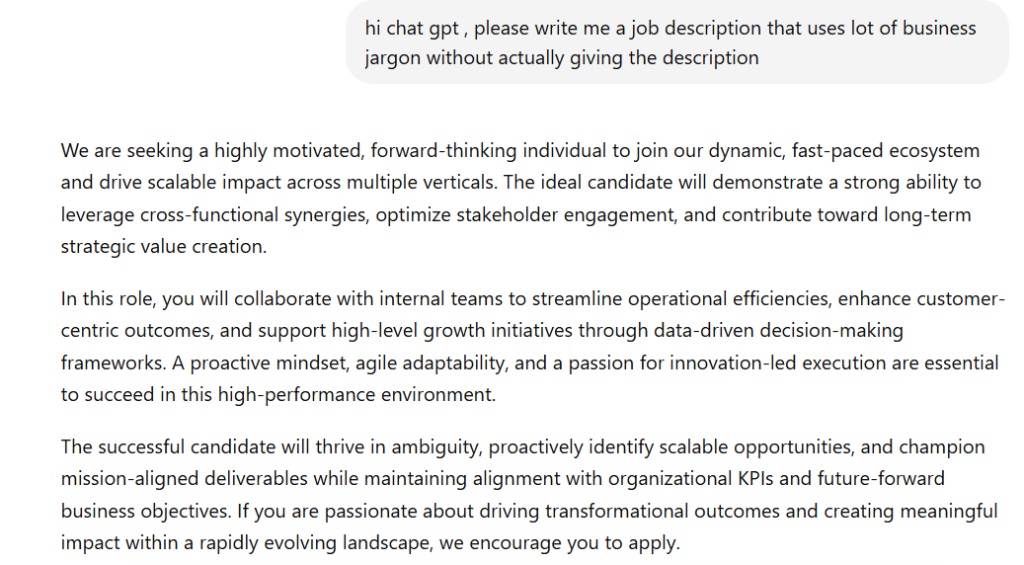
recycled across a dozen different company pages.
The logo changes. Everything else doesn’t. “Fast-paced environment,” “rockstar mindset,” three bullet points about culture that somehow communicate nothing about what you’d actually be doing on a Tuesday.
People online began calling it “AI slop,” and the term stuck because, at some point, writers stopped creating content for real people and started writing for the abstract concept of a “candidate.” At that point, you are no longer reading a genuine job description; you are reading a collection of corporate buzzwords assembled quickly.
So, with more people entering the workforce who’ve grown up fluent in exactly this kind of language – who can smell a GPT-assisted job post from the headline- these descriptions aren’t just unconvincing anymore, they’re actively a signal.
Not of a fast-paced exciting opportunity. Of a company that didn’t think hard enough about who they were trying to hire, or why.
The Real Employer Brand Gets Built in the Comment Sections
If you’ve been job hunting actively, you’ve probably already seen the same description. Employer branding used to live on career pages. Now it lives in Reddit threads, LinkedIn comments, and TikTok videos where candidates are picking apart job descriptions in real time.
When companies post vague, inflated, or unrealistic roles, those listings often outlive the hiring cycle itself.
Hyqoo, for example, recently went viral after a job post asked for over four years of experience in an AI skill that had only existed for around three years, triggering widespread ridicule across Reddit and later receiving mainstream news coverage from The Economic Times.
Similar discussions regularly emerge through viral Reddit posts such as “Extremely cringe job description on top of the current market”, where candidates publicly critique listings that rely heavily on corporate jargon, unrealistic expectations, or vague responsibilities.
Often, these discussions become less about a single opening and more about what the posting suggests regarding the company’s culture, structure, and treatment of employees.
The result is that a poorly written job description no longer disappears quietly. It becomes searchable, shareable, and attached to the company’s reputation. Ultimately, a job description is often the first real glimpse people get into how a company thinks and communicates. And when that feels unclear, people notice earlier than companies expect.
But there’s a better way
After extensively trying different existing job description generation tools in the market, we couldn’t find a good match. So, we decided to build it ourselves and created a 3-minute, no sign-up job description generator that finally captures the essence of what a hiring manager is really looking for. All it takes is answering 11 questions in 3 minutes, and you get a job description that’s true to your expectations, while efficient enough to not force you to stare a blank screen.
Start building your intentful job description here.