Apply for Me’ sounds fantastic on paper, but its second degree consequences haven’t yet been taken to account. Plus it’s a feature that’s solving the symptoms of a wrong problem.
The biggest pain point in recruitment isn’t the effort to apply to the job you’d love or screening candidates.
The real source of pain is finding those dream or perfect matched shortlists in the first placeboth for the employer as well applying.
Applying for jobs is tedious but bounded: an hour, maybe two. Scrolling for endless hours through listings, and guessing if the job posts are even real- is where candidates spend the majority of their job searching hours.
“Apply for Me” automates the step that was never the real bottleneck.
The problem isn’t application but recommendation.
We’ve had the technology for years
Recommendation engines have been part of job boards for almost a decade. Every major board has had a team of data scientists and AI/ML specialists working for them, way before ChatGPT arrived. Indeed, LinkedIn, and Naukri have held millions of resumes and employer job descriptions across the years.
With that much capital and data, finding the right jobs through better recommendations should be a solved problem. But it isn’t. Primarily because, the underlying reason isn’t technical but more about the platform’s business incentive.
A job board’s revenue favors “user engagement” and “customer repeat rates” over successful job matches.
In short, a perfect match is a lost customer.
Nobody at these companies wants candidates to fail. But the system rewards time spent, jobs viewed, and applications sent, because those are what get measured and monetized.
This is the difference we’re building around. Traditional platforms charge employers for job listing slots, resume database access, or ad placements, their revenue scales when job listings stay active and candidate volume stays high.
Growth for Impact flips this commercial model completely.
Instead of monetizing traffic or job post impressions, our commercial structure is tied to successful candidate placements and verified retention milestones. Employers pay when they secure long-term hires, while job seeks can avail domain-specific courses for free of cost.
Who wins if “Apply for Me” succeeds

Options like “Apply for Me” will only break recruitment systems further, for both job seekers and employers alike. The feature will inflate the apply numbers, but it will harm the user experience for both sides.
More applications flowing in, will mean more activity for the platform and more resumes for AI tools to process. But the candidate won’t be getting any closer to the right job. Nor would the employer get any closer to the right candidate.
If this succeeds, there will be only two winners: the AI companies processing these millions of resumes, and the giant job board platforms themselves.
Let’s look at why recruitment got broken in the first place.
To understand how the system breaks, first let’s look at each actor’s motivation and how they make money. In recruitment, those actors are job seekers, employers, job boards, recruiters, and advertisers:
● Job seekers want the right job quickly.
● Employers want the right hire, but are under pressure to fill roles fast.
● Job boards earn from job postings, sponsored listings, and advertising, so they depend on traffic and engagement, not recruitment success rate.
● Recruiters earn from placements, which pushes them toward volume and speed.
● Advertisers pay for attention, so they pay for engagement.
Only one of these five, the job seeker, is paid off by a successful match, and they’re the ones funding the least. Almost everyone who funds the system benefits from activity. Hardly anyone benefits from the match itself. That is the broken incentive structure at the heart of running a job board. Every product decision flows from it, including the ones that look like they help job seekers.
Glassdoor blocks access to information until a user contributes their data, like- CTC, experience, etc. The algorithm rewards the sheer volume of database entries to boost their engagement. This practice frustrates job seekers or forces them to write rushed reviews just to unlock subscription barrier. Instead of rewarding job seekers with transparent and honest reviews, the platform demands forced corporate praise.
Why companies love ATS systems, and the myth of meritocracy
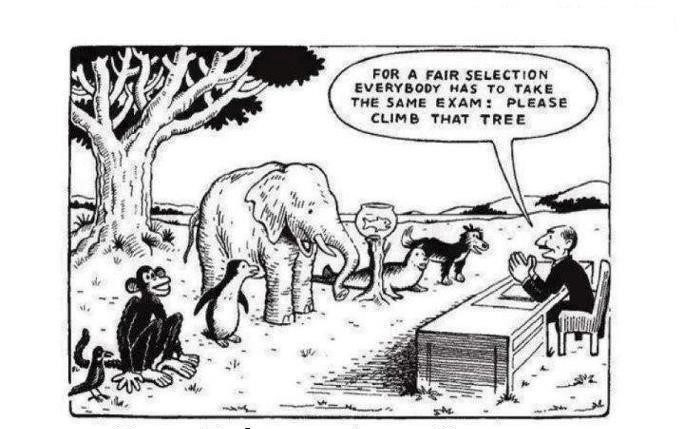
Applicant tracking systems solved a real problem for employers: too many applications, too little time. They offer the appearance of fairness. If a system scores every resume against the same criteria, surely the process seems objective.
That belief deserves scrutiny.
ATS promises objectivity, but keyword matching rewards candidates who master the filter, not those best suited for the role. And a rejection from a system, delivered instantly and without explanation, feels objective precisely because no human can be questioned about it.

This isn’t just an operational headache. Organizations are blindly trusting ATS, where talent is discarded before ever reaching a human manager. Hiring carries social and governance weight: candidate fairness, bias mitigation, and transparency in decision-making. When automated black-box screens reject candidates at scale, accountability disappears.
In 2014, Amazon developed an experimental AI recruiting tool trained on a decade of historical resumes that predominantly featured male applicants.
Consequently, the algorithm learned to penalize resumes of women and favored male candidates. Amazon eventually had to scrape down the whole project because the AI agent had taught itself to be misogynistic.
Intentful hiring takes a different approach.
Growth for Impact matches a candidate’s profile to the jobs they genuinely fit using contextual mapping, so a candidate doesn’t have to guess at keywords and a recruiter doesn’t have to dig through a pile. The goal is a process an employer can stand behind and a candidate can understand.
Why job seekers can’t get enough of AI-polished resumes?
If we can’t blame companies for using ATS systems before a human ever lays an eye on a resume, with what argument can we blame job seekers for AI refined resumes? Is our argument against modifying resumes to match keywords contained in the job descriptions? Or is it about them using AI to do that?
ATS reduces human capabilities to keywords, tailoring the resume perfectly to the job description becomes an essential skill. It’s no surprise that job seekers can’t get enough of them. The problem is what happens when everyone does it. Every resume reads well and matches the filter, so resumes stop differentiating candidates. Employers tighten the filter, and candidates optimize harder.
By the way, most companies these days are using AI to even write their job descriptions. Consequently, they all look bland, to the point of being meaningless. If you want to actually capture the essence of your requirements for a role, you need a job description generator that asks you the right questions.
From Easy Apply to “Apply for Me”
Easy Apply was the first big disruption of hiring metrics that earlier used to be meaningful. Before single-click applications, applying to jobs took some effort: a tailored cover letter, a custom resume, a decision about where to spend limited time. That effort was a signal that someone cared enough to make a case.
Easy Apply collapsed that cost. Application counts per role multiplied, and an application became a sign that a button existed, not a sign of interest. Employers saw the flood and answered with more filtering and more rejection. Job seekers saw the rejections and applied to even more roles.
“Somebody is going to use this to spam thousands of perfectly tailored applications with engineered qualifications just to waste businesses time out of spite, and i don’t blame them lol. Maybe we’ll come up with a better hiring system.”
-that was the general reaction when an AI-enthusiast posted on Reddit about his new tool enabling 1000 job applications in 48 hours
“Apply for Me” is the logical next step in that loop- when the job board itself enables candidates to mass spam companies. Each step makes sense on its own. But together they produce a market where nobody can tell who is serious.
What comes next: AI-powered ATS and “AI Screen for Me”?
“We posted a role on Monday. By Tuesday morning, we had over 1,200 applications. The vast majority didn’t meet basic qualifications. Candidates are using auto-apply tools, forcing us to use harsher automated screeners just to keep our heads above water.” – a hiring team posted on Reddit
It’s easy to see why. If a thousand applications arrive for one role, and many were generated or submitted by software, no human team can read them all. So employers turn to AI to screen the AI-written applications.
An AI writes the resume, another submits the application, and yet another reads and rejects it. Somewhere in the middle there used to be two people trying to find each other. The combined effect is a system that processes more and understands less, where platforms collect activity, AI companies collect volume, and the humans on both ends lose time, trust, and signal.
The way out: Intentful Hiring
If using more AI was the answer, someone at the big job boards would have figured it out by now. It’s not. We need to deeply relook at our hiring processes and ask different questions.
At Growth for Impact we are building a framework for more intentful hiring that leads to better discovery of mutual intent and long-term fit. If you’d like to explore this more or sign-up for a early access to our intentful hiring program, please write to us at support@growthforimpact.co